English first
Begin in one large language market while keeping the architecture ready for later localization.

Pilot, vision and opportunity
KIDNOVA could become both a commercially viable learning platform and a high-impact public-learning infrastructure. That possibility depends on child protection, instructional validity and human governance being built in from the beginning.
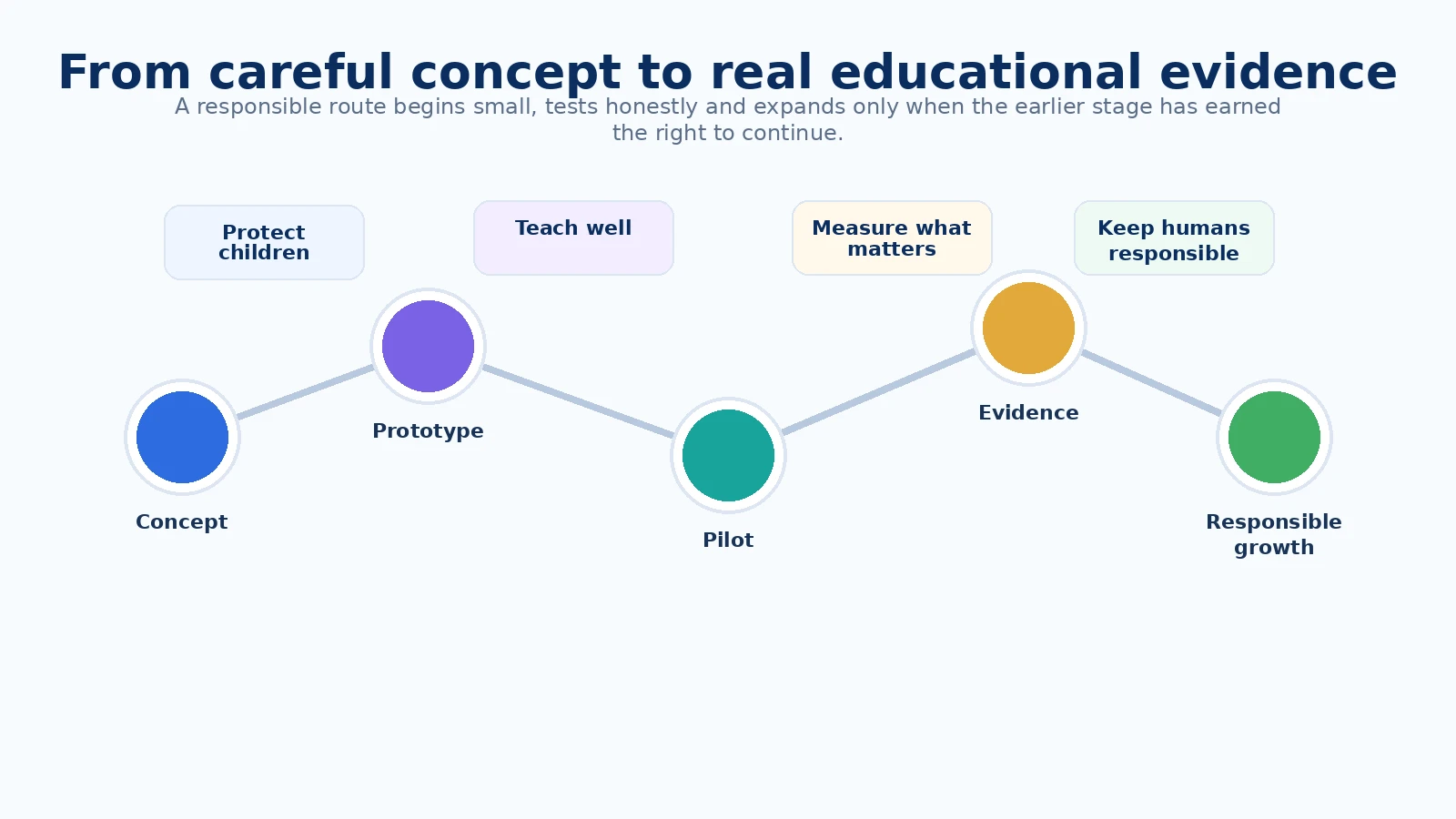
A disciplined beginning
The ultimate vision is broad. The first practical step should be narrow enough to build, supervise, test and improve responsibly.
Begin in one large language market while keeping the architecture ready for later localization.
Select a defined learner group rather than attempting to support every child aged 5–12 immediately.
Start with a manageable educational scope and prove that the teaching model works.
Use familiar devices before adding every possible platform, kiosk and specialist interface.
Keep parents, teachers and safeguarding personnel visible and responsible from the first pilot.
Agree in advance what must be measured and what claims may not yet be made.
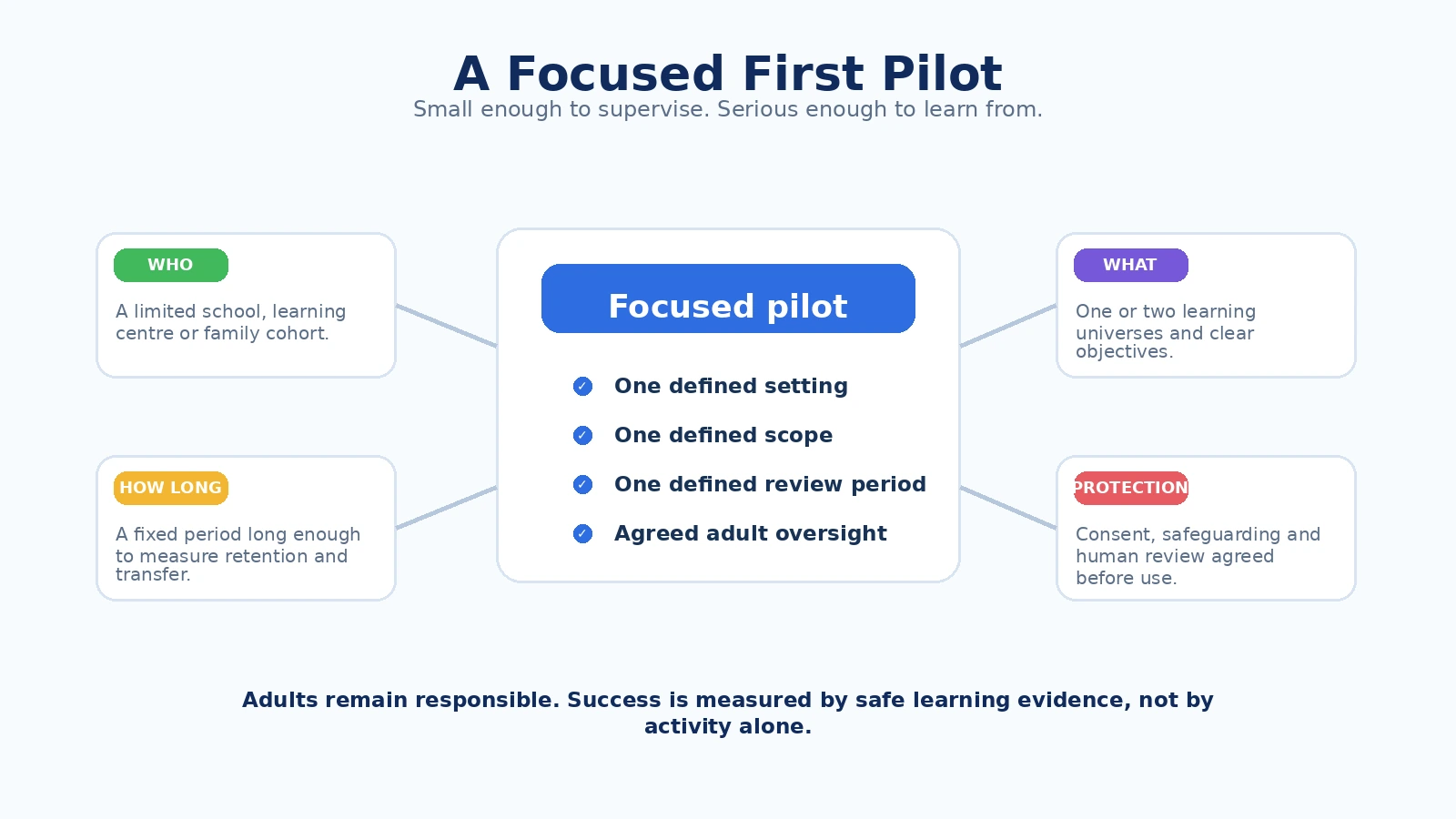
A possible first pilot
A pilot should answer whether KIDNOVA can support real learning safely—not merely whether children enjoy using it.
A defined group with clear adult responsibility.
One or two Learning Universes and a limited set of measurable objectives.
Long enough to observe retention and transfer, not only first-session performance.
Permissions, escalation routes, retention and human review are established before use.
Results are assessed against pre-agreed learning, experience and governance measures.
KIDNOVA supports practice; it does not make consequential educational or safeguarding decisions.
What success must mean
Badges, clicks and daily returns may describe activity. They do not prove that a child understands, remembers and can use a skill independently.
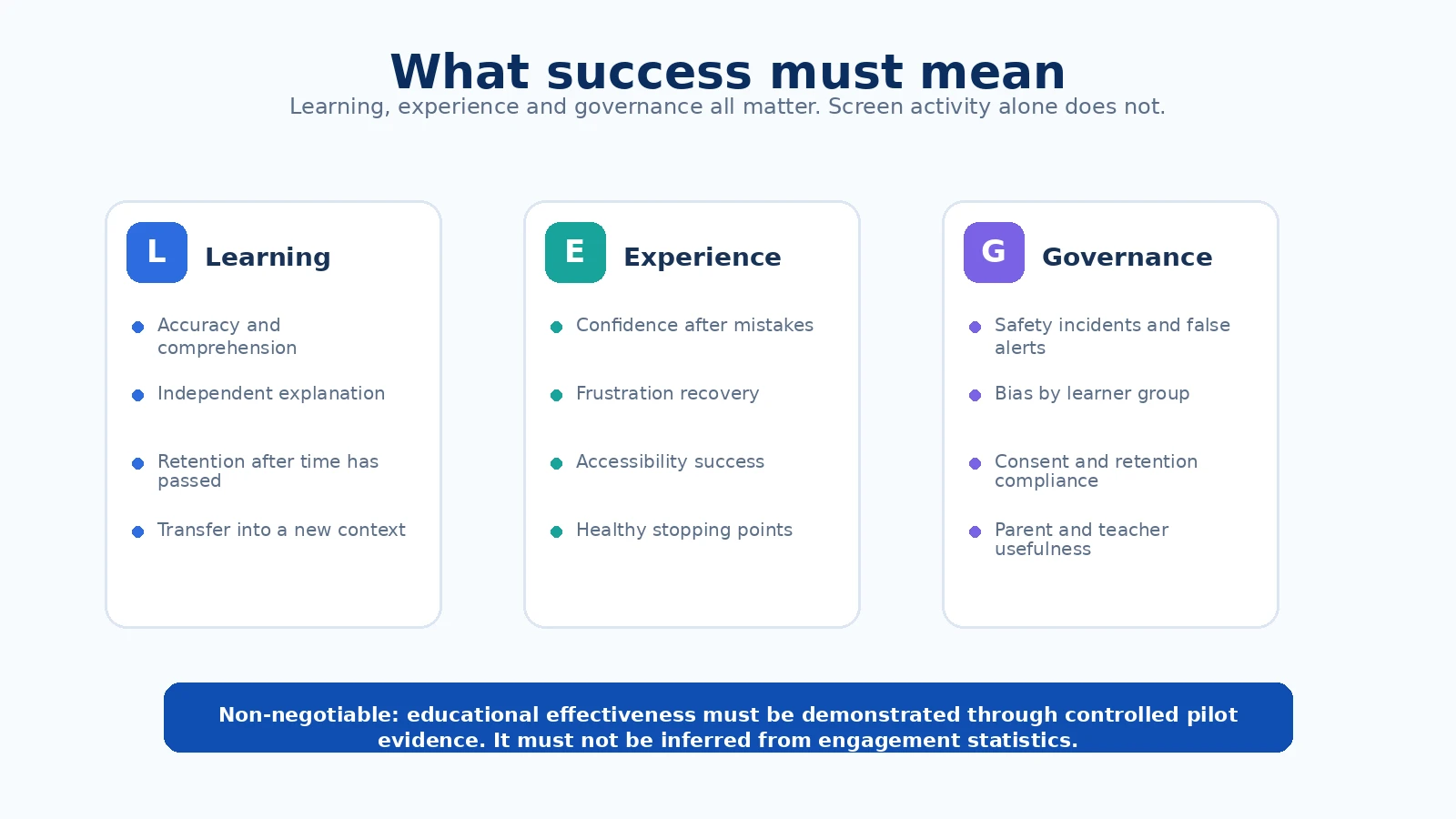
Educational effectiveness must be demonstrated through controlled pilot evidence. It must not be inferred from engagement statistics.
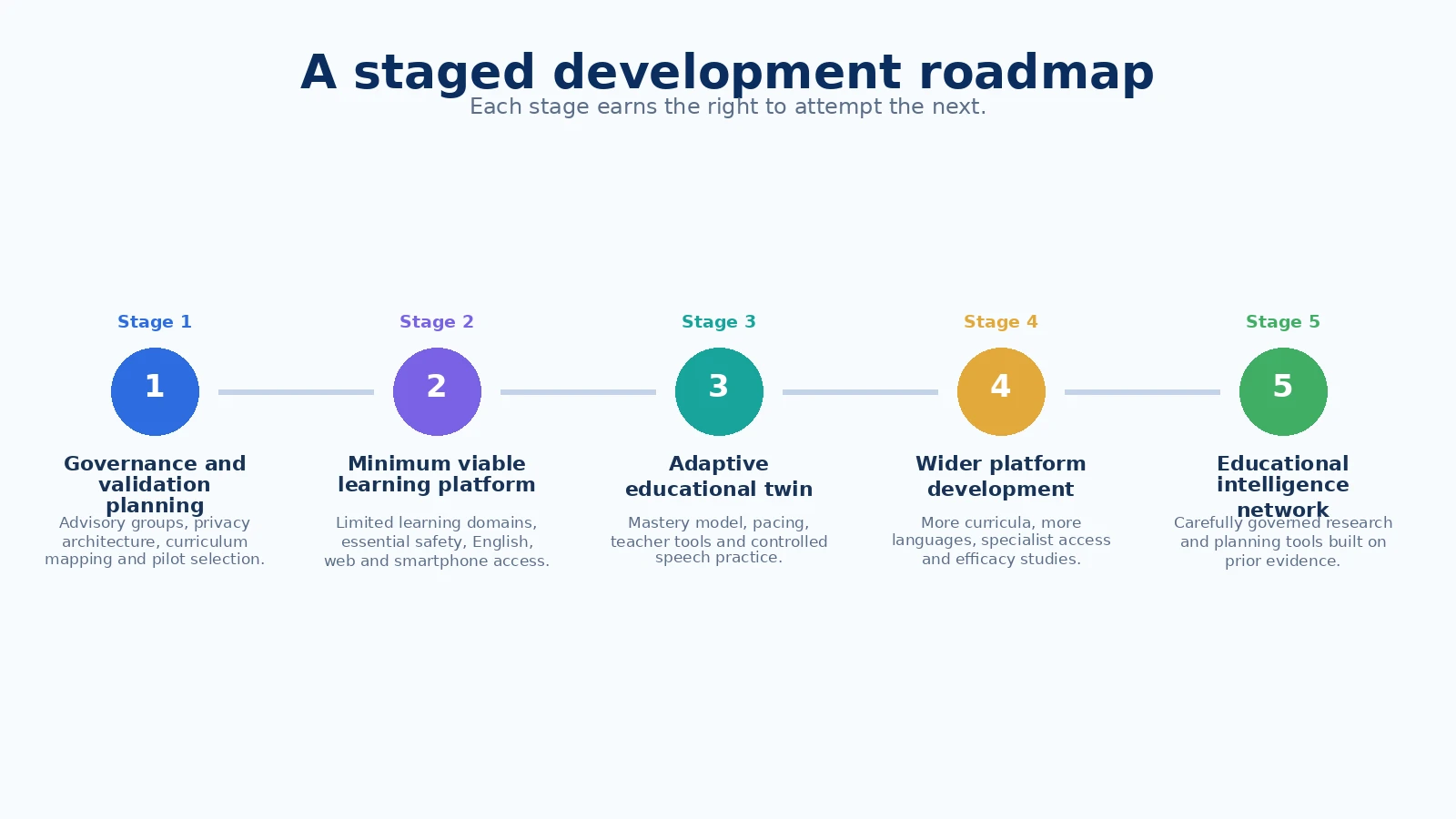
Development roadmap
The roadmap moves from governance and a limited working platform toward wider capability only after earlier assumptions have been tested.
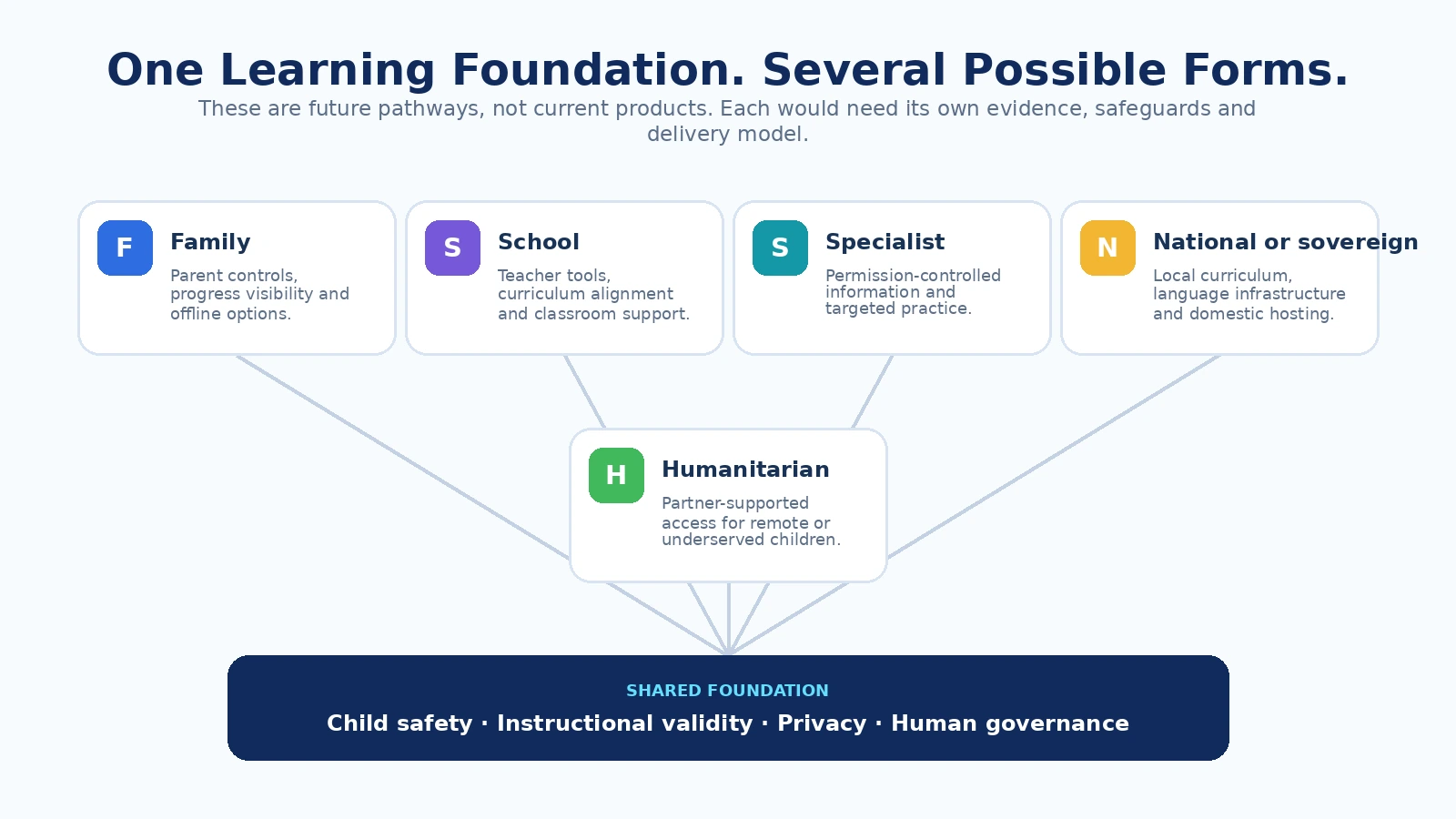
Potential pathways to market
These are future pathways, not existing products. Each would require its own product design, safeguards, pricing, support model and evidence.
What the project needs next
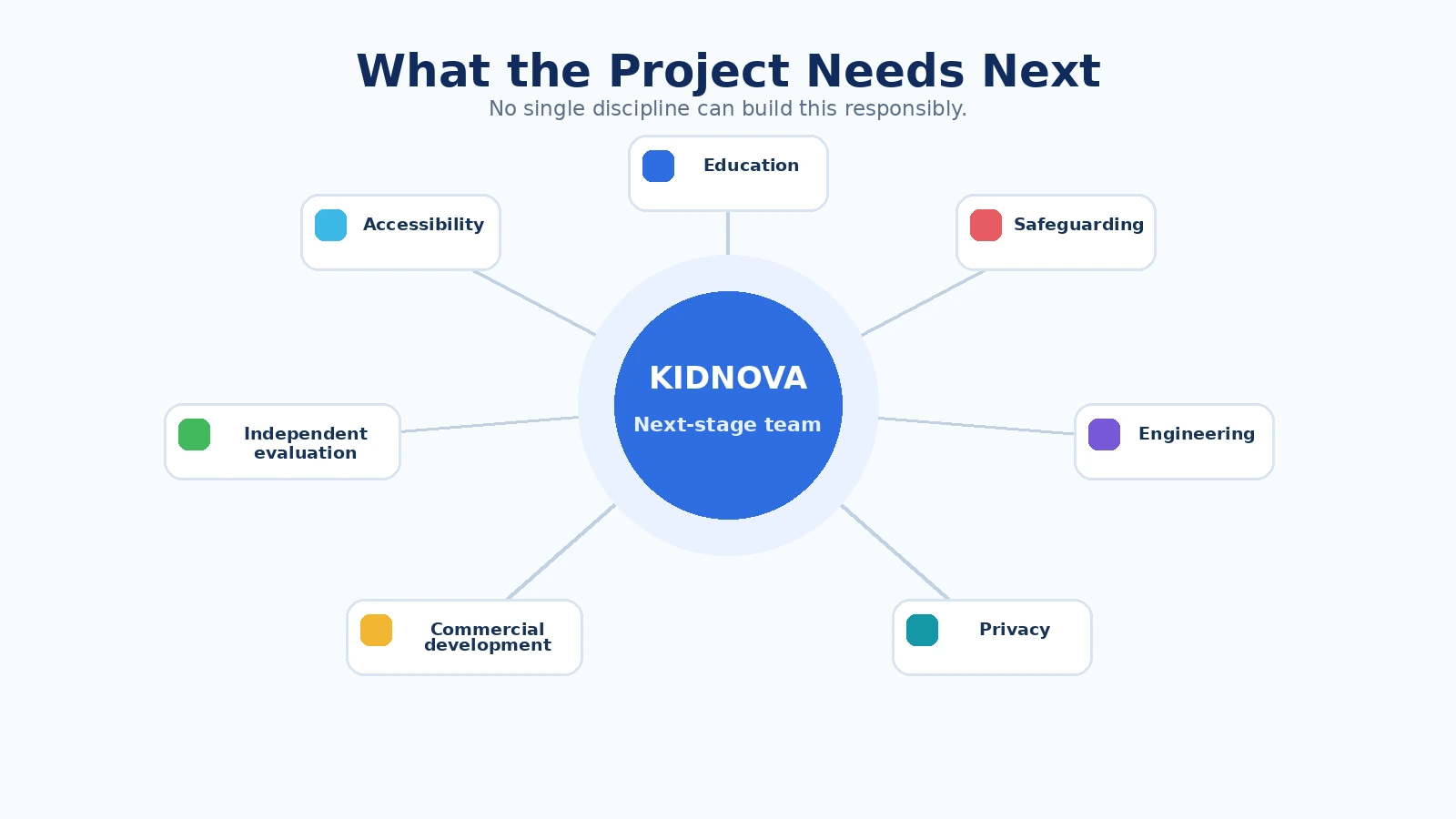
KIDNOVA will need people who understand children, education, safety, technology, evidence and sustainable delivery—and who are willing to challenge weak assumptions before those assumptions reach a child.
A careful invitation
KIDNOVA welcomes conversations with educators, safeguarding specialists, technology partners, pilot institutions and strategic supporters who believe that child-facing educational technology must be developed carefully, tested honestly and governed responsibly.